
Demystifying the Microscopic: A Beginner’s Guide to the Weird World of Quantum Physics
Have you ever looked at the world around you and wondered what it’s really made of at the most fundamental level?
For centuries, classical physics—the rules laid out by giants like Isaac Newton—did a fantastic job of explaining our everyday reality. It tells us why an apple falls to the ground, how planets orbit the sun, and why a speeding car takes time to brake. But in the early 20th century, scientists peering into the very building blocks of matter discovered something astonishing: when you zoom in close enough, the rules of the universe completely change.Welcome to the realm of quantum physics.It is a world where objects can be in two places at once, where particles can communicate instantaneously across vast distances, and where the mere act of observing something changes its behavior. Let’s dive into the fascinating, mind-bending world of the microscopic.
What Exactly is Quantum Physics?At its core, quantum physics (or quantum mechanics) is the branch of science that studies nature at the scale of atoms and subatomic particles (like electrons, protons, and photons).The word “quantum” comes from the Latin word for “how much.” In physics, a quantum is the smallest possible discrete unit of any physical property. Think of it like water: from a distance, water flows continuously. But if you zoom in, you see it is made of individual, distinct H_2O molecules. Energy, light, and matter all behave the same way—they exist in tiny, indivisible packets, or “quanta.”The 3 Pillars of Quantum WeirdnessTo understand quantum physics, you have to let go of your everyday common sense.
Here are the three most famous (and bizarre) principles that govern the quantum realm:
1. Wave-Particle DualityIn our macro world, things are generally either waves (like sound or ripples in a pond) or particles (like a baseball or a grain of sand). In the quantum world, things are both.The most famous demonstration of this is the Double-Slit Experiment. When scientists fire tiny particles like electrons at a barrier with two slits in it, the electrons don’t just go through one slit or the other to form two distinct lines on the wall behind them. Instead, they create an “interference pattern”—a series of bands that only waves can make. The electron essentially travels as a wave, passes through both slits simultaneously, and interferes with itself before hitting the wall as a distinct particle.
2. SuperpositionImagine flipping a coin. While it is spinning in the air, is it heads or tails? In classical terms, it’s definitively one or the other; we just don’t know which one yet.
In quantum physics, a particle in a state of superposition is literally both heads and tails at the same time. It exists in all possible states simultaneously until it is measured or observed. This concept was famously illustrated by the “Schrödinger’s Cat” thought experiment, which proposed a scenario where a cat in a sealed box is simultaneously alive and dead until someone opens the box to look.
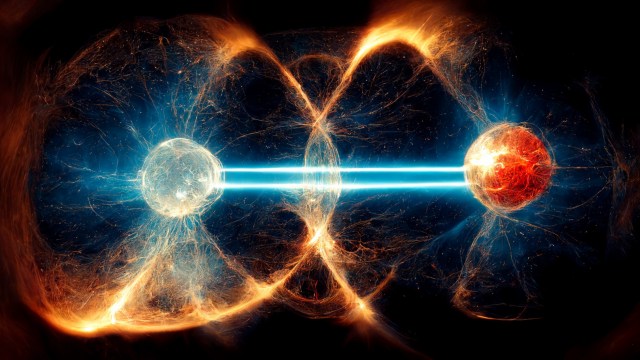
3. Quantum EntanglementAlbert Einstein famously referred to this phenomenon as “spooky action at a distance.”When two particles become entangled, their fates become permanently linked, regardless of how far apart they are. If you measure the state of one entangled particle here on Earth, you instantly determine the state of its partner—even if that partner is on the other side of the galaxy. This happens faster than the speed of light, challenging our fundamental understanding of space and time.Why Should You Care? (Real-World Applications)It is easy to dismiss quantum physics as abstract theoretical math meant only for scientists in white coats. However, the device you are using to read this blog post wouldn’t exist without it.Quantum mechanics is the foundational science behind modern technology.
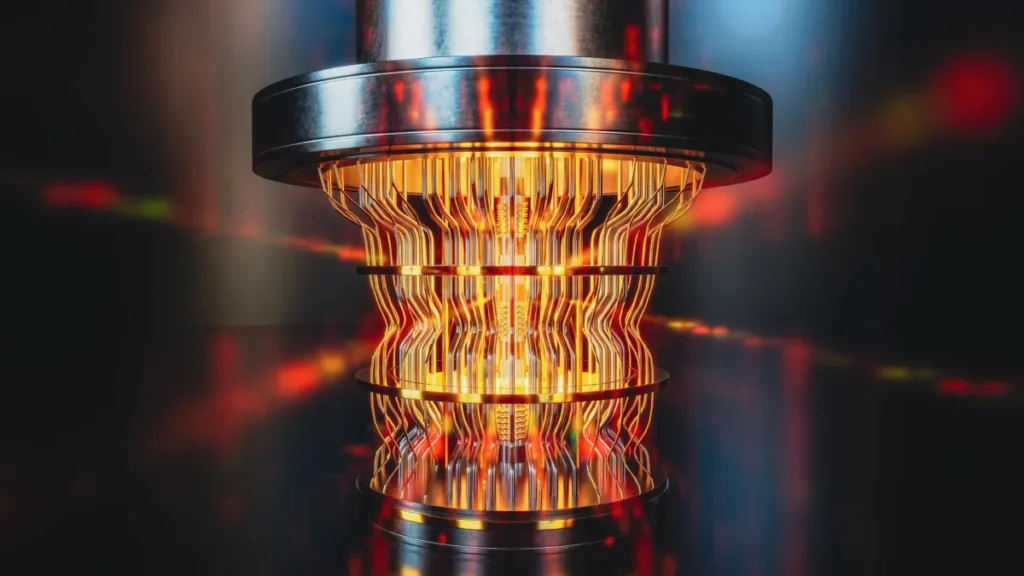
Here is how it impacts your life today—and how it will shape tomorrow:Semiconductors and Computers: The chips powering your smartphone and laptop rely entirely on our understanding of how electrons move through solid matter—a purely quantum phenomenon.Lasers: From barcode scanners at the grocery store to fiber-optic cables delivering high-speed internet, lasers work by stimulating atoms to emit light in very specific, quantum-regulated ways.MRI Machines: Magnetic Resonance Imaging uses the quantum property of “spin” in the nuclei of your body’s hydrogen atoms to create incredibly detailed medical images without harmful radiation.The Future: Quantum Computing: Tech giants are currently racing to build reliable quantum computers. By using “qubits” (which leverage superposition to be a 0 and 1 at the same time), these machines will eventually solve complex problems in medicine, cryptography, and artificial intelligence millions of times faster than today’s best supercomputers.
If you are interested in quantum mechanics then you can read our more posts related to quatum physics